
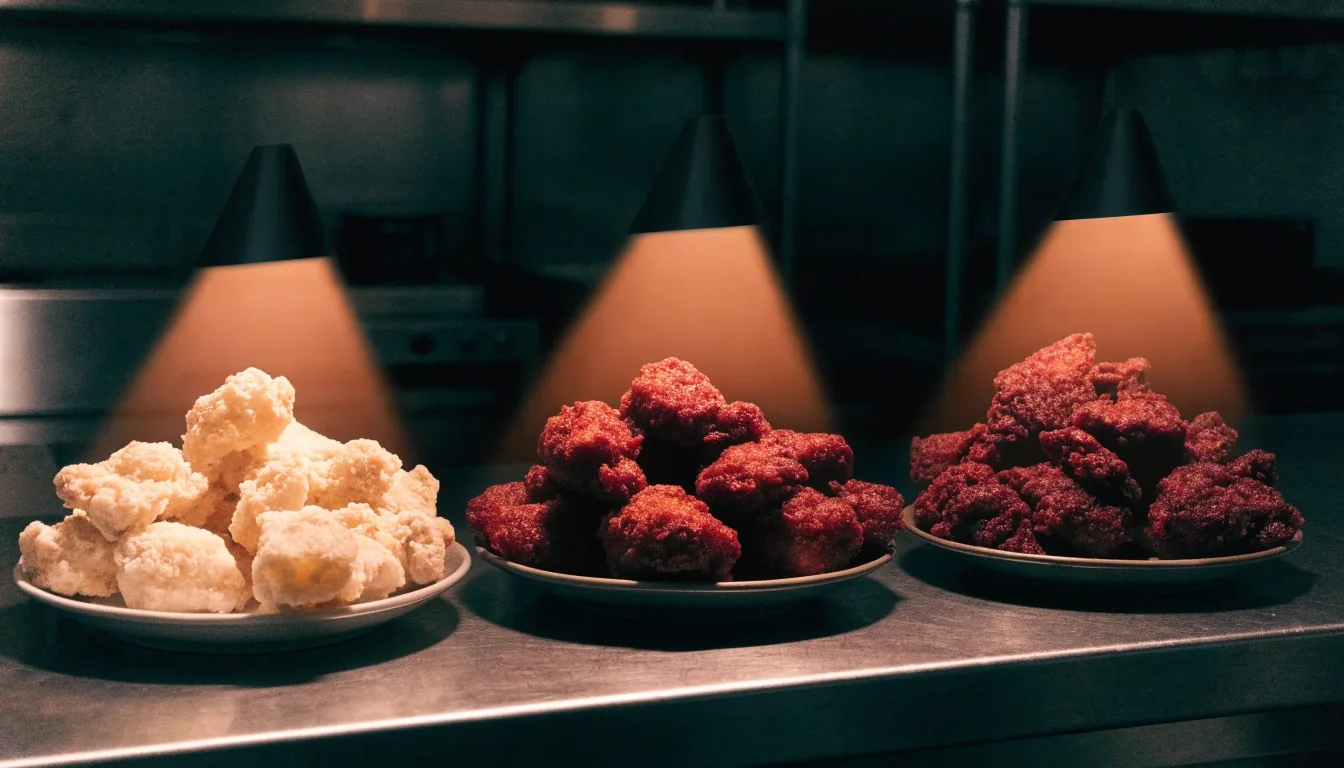
Dave's Hots Chickens — Heat Levels & Flavor Guide
Choose Your Heat Level for Hot Chicken
Heat is a finish, not a foundation. Fry one plain batch, then apply spice to portions at the end, and a household with different tolerances eats from the same pot.
How heat actually gets onto the chicken
Most fried chicken goes wrong on heat for the same reason: the cayenne goes into the flour, the buttermilk, or both, and then there is no way back. If the batch is too hot for the table, you are frying again. If it is too mild, you are eating plain chicken and apologising for it.
The heat-levels approach separates the two jobs. Fry the chicken plain, drain it, then finish each portion with the blend or paste that suits the person eating it. The crust underneath stays crisp either way, because nothing wet goes on before the fryer.
This page walks through the blends in the collection, how each one behaves on the palate, how to build a paste, how to serve a table that disagrees about spice, and what to do when someone overshoots. It also covers the Nashville hot style specifically, since that is the reference most people have in mind when they order Dave hot chicken.
Read the levels in this order
- Mild — paprika and garlic Seasoned, not spicy
- Medium — cayenne-forward Delayed, lingering
- Hot — the Nashville finish Brushed after frying
Pick the level by the person, not by the batch. Everything below assumes one plain fry and a set of separate finishes.
Mild
Mild: paprika and garlic
The mild blend is built on sweet paprika with garlic powder, onion powder, and a little black pepper. It reads as seasoned rather than spicy. This is the blend for nuggets headed to kids, for cutlets served with gravy, and for anyone who wants the crunch to be the headline rather than the burn.
It also works as a base. Add cayenne to a portion of the mild blend and you have the medium without making a second batch from scratch. That single trick is what makes a mixed table cheap to serve: one bowl of mild, one bowl built up with cayenne, one brushed finish, and the prep line stays short.
Keep the mild blend dry until the moment you use it. Paprika and garlic powder both clump once they sit in a jar with any moisture, and a clumped blend dusts unevenly across a crust — you get pale patches next to heavy ones, which looks like an accident even when the flavour is fine.
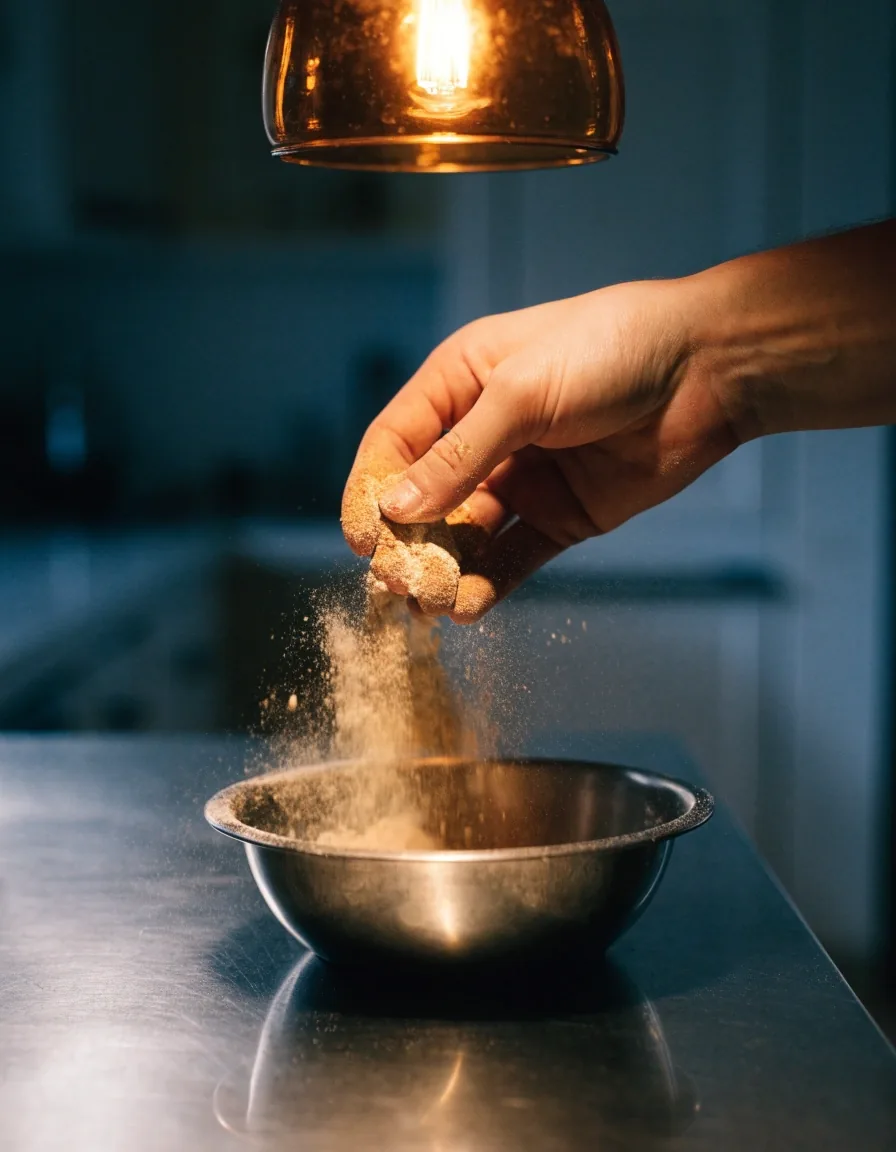
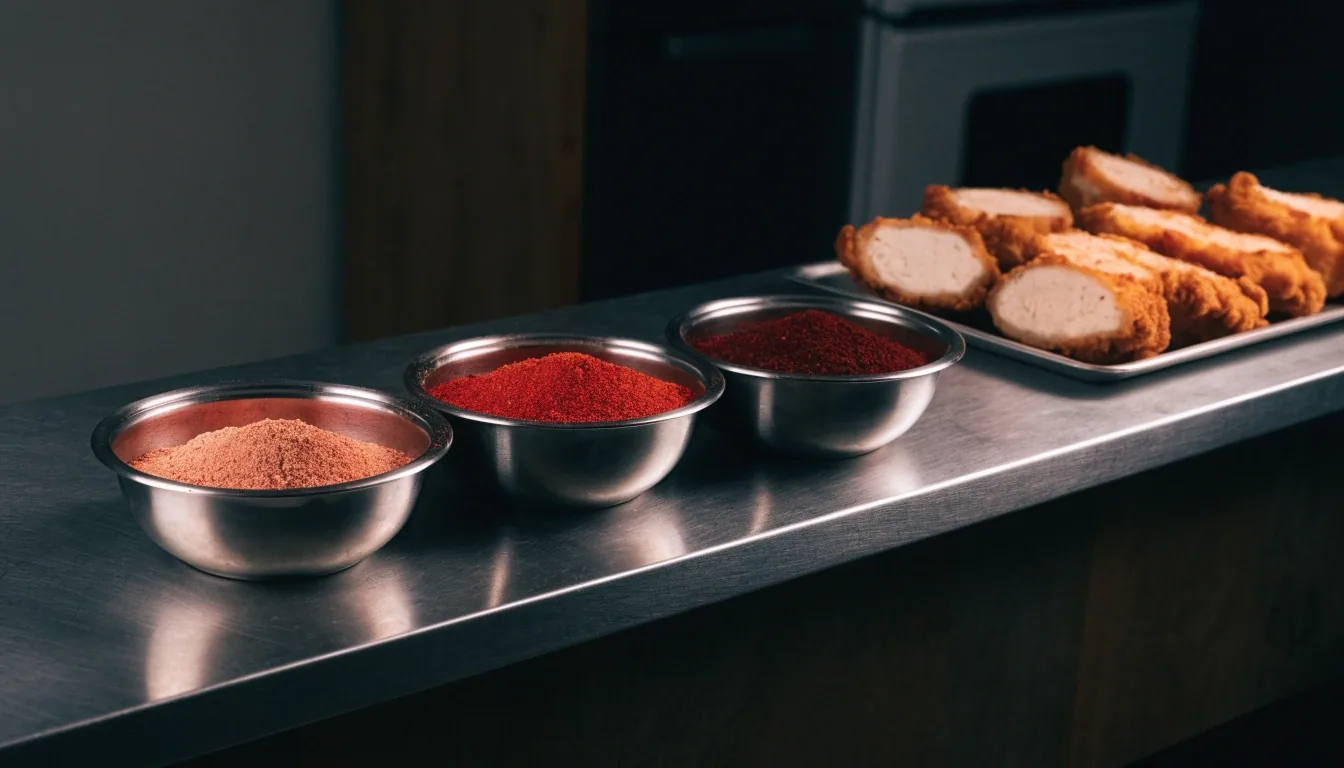
The mild blend dusted over a plain fried piece. Add cayenne to a portion of this bowl and you have medium without a second batch.
Medium
Medium: cayenne-forward
Medium leans on cayenne but balances it with brown sugar and a touch of smoked paprika. The sugar is not there to make it sweet. It rounds off the sharp edge of the cayenne so the heat arrives a beat later and lingers rather than hitting all at once.
This is the level most people land on when they say they like hot chicken, and it is the level that works best as a dry rub before frying, since the sugar helps the crust brown. Rub it on and let the pieces sit while the oil comes up to temperature.
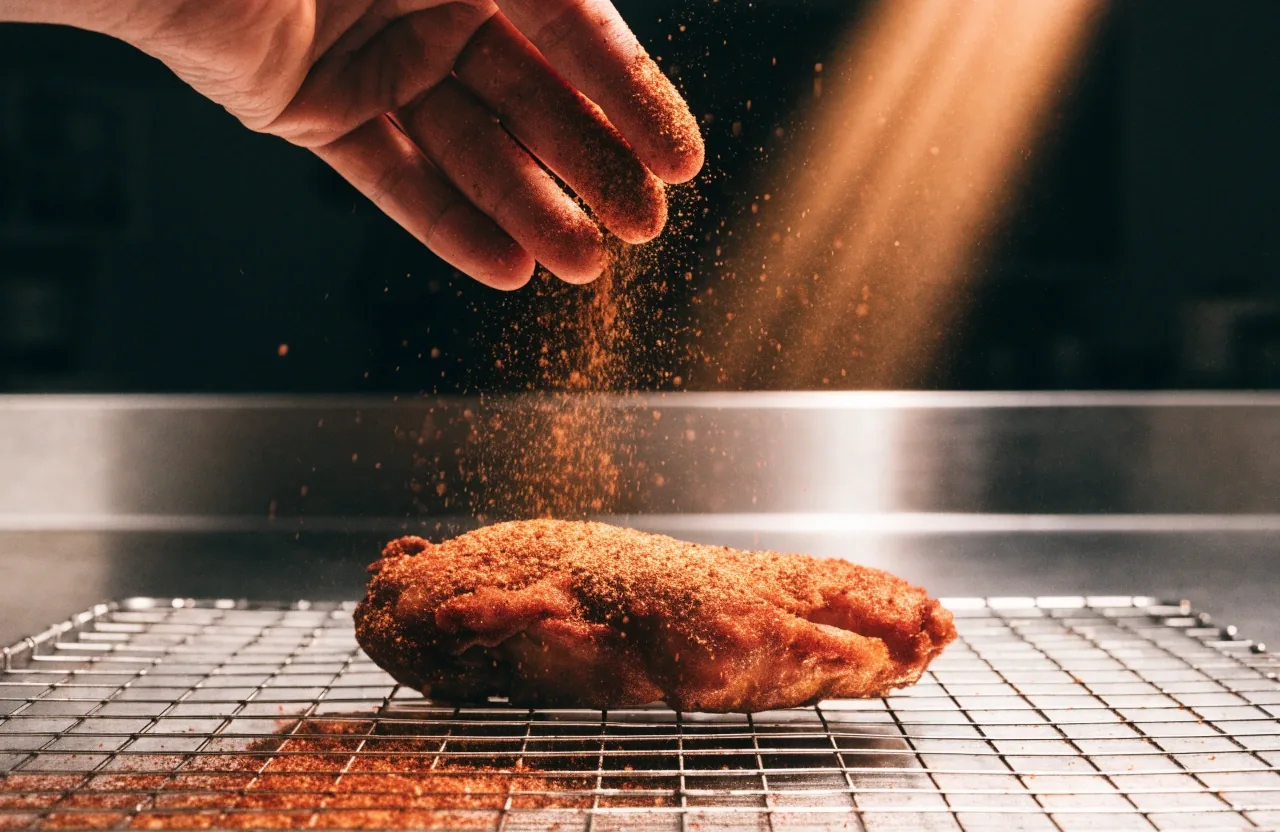
Use it as a dry rub
Applied before frying, the brown sugar in the blend helps the crust take on colour and holds the cayenne against the surface.
Or dust it after
Dusted over a drained piece, the same blend gives you the delayed heat without darkening the crust any further.
Hot: the Nashville finish
Nashville hot chicken is a Tennessee regional style, traditionally served over white bread with pickles. The heat comes from cayenne mixed into hot frying oil or a paste, brushed over the finished piece. Hattie B's built a multi-city chain on a menu of graduated heat levels, which is roughly how the style travelled beyond Nashville.
The collection's hot finish follows the same idea. You take a ladle of the frying oil, whisk in cayenne, a little brown sugar, and a pinch of the dry blend, then brush it on. Because it is applied after frying, the crust stays crisp underneath instead of steaming itself soft in the basket.
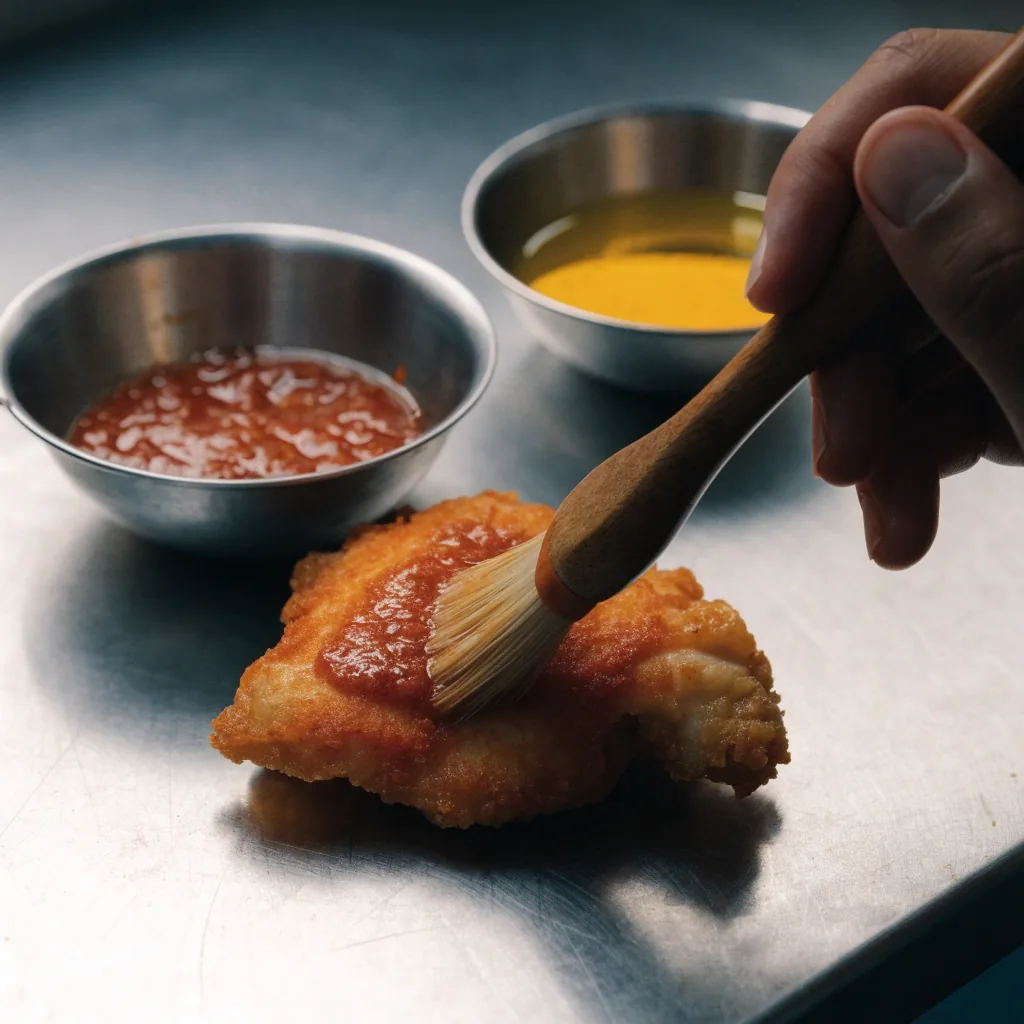
Building a heat paste
A paste gives you more control than a dry sprinkle. Mix cayenne with a small amount of hot oil, add smoked paprika for depth, and a spoon of honey if you want the heat to carry a little sweetness. Brush it on with a pastry brush while the chicken is still hot so it soaks into the craggy surface rather than sitting on top of it.
Keep the paste thick enough to cling but thin enough to spread. If it seizes up, add oil a teaspoon at a time. The recipe lists ratios, but the texture is the real guide — a paste that drips off the brush is too loose, and one that tears the crust is too tight.
Serving for mixed heat preferences
The practical move is to fry plain, drain, then divide the batch into two or three bowls and finish each separately. Mild in one, medium in another, hot brushed on the third. This takes about two extra minutes and solves the problem of cooking for a group with different spice tolerance.
Label the bowls if you are serving a crowd. Cayenne and paprika blends look similar on a dark crust, and someone will find out the hard way. A folded slip of unprinted paper under each bowl does the job without turning dinner into a procedure.
Work left to right with the mildest blend first if you are brushing by hand, and keep a clean towel between bowls. Cross-contaminating a mild bowl with a cayenne brush is the one mistake that actually ruins a mixed table, and it is invisible until someone bites.
Cooling the burn without killing flavor
Dairy cuts heat better than water. A buttermilk-herb dip, a spoon of plain yogurt, or a glass of milk will do more than a glass of water, which just moves the capsaicin around the mouth and down the throat. Pickles and white bread, the traditional Nashville pairing, work for the same reason: acid and starch.
Do not add sugar to a finished piece to tame it. Sugar amplifies the perception of heat on the tongue rather than reducing it, which is why a spoonful of honey on an already-hot wing tends to make the next bite worse instead of better.
If you have overshot a whole batch rather than a single piece, the fix is dilution rather than rescue. Toss the too-hot pieces with a handful of plainly fried ones and a little more drained oil, and the average heat drops without any new cooking.
What actually helps
- A buttermilk-herb dip on the side of the plate
- Plain yogurt, or a glass of milk rather than water
- Pickles and white bread, the traditional Nashville pairing
- A plain piece alongside the hot one, so the palate resets
Avoid adding sugar to a finished piece. It makes the heat read stronger, not weaker.
Where the style came from
Hot chicken is a Nashville dish with a long local history before it became a national category. The core elements have stayed stable: cayenne heat, white bread, pickles, and a fried piece underneath. What changed is scale. Regional restaurants expanded, chains adopted the format, and home cooks started asking how to make it themselves.
That last part is what this collection answers. The style is not difficult once you separate the fry from the finish, which is exactly what the heat-levels approach does. What follows is the shape of the tradition, written as a set of stable parts rather than a story about one kitchen.
Adjusting heat for sauces
If you are tossing wings in a sauce rather than brushing a dry finish, add heat to the sauce, not the coating. Honey-hot glaze takes cayenne well. A vinegar-based sauce carries heat differently and tends to taste sharper, so use less. Gravy-based finishes, in the softer Jollibee style, want almost no added heat or the gravy turns bitter.
Match the heat delivery to the format and you avoid the common mistake of over-spicing a wet finish. A coating can hold more cayenne than a glaze can, because the fa in the sauce carries the capsaicin straight across the tongue instead of leaving it on the crust.
Format to delivery
- Honey-hot glaze Takes cayenne well, keeps the sweetness forward
- Vinegar-based sauce Tastes sharper — use less cayenne than you think
- Gravy-based finish Almost no added heat, or the gravy turns bitter
- Dry brush finish Holds the most heat and the crispiest crust
Questions people ask before their first batch
Can I make one batch and serve it at three different heat levels?
Yes. Fry and drain the whole batch plain, then split it into two or three bowls and finish each one separately. Mild in the first, medium in the second, hot brushed on the third. It adds a couple of minutes at the end, not a second fry.
Does brushing hot oil over the crust make it soggy?
Not if you brush rather than dunk, and not if the oil is genuinely hot. A thin, even coat on a drained piece soaks into the craggy surface and leaves the crust crisp underneath. Sitting in a pool of warm oil is what softens it.
My paste keeps seizing up in the bowl. What is happening?
The oil has cooled below the point where it holds the cayenne in suspension, so the solids drop out. Warm it back up gently and add oil a teaspoon at a time until it spreads. Thick enough to cling, thin enough to brush — the texture is a better guide than the ratio.
Is the mild blend just a weaker version of the hot one?
No — it is a different composition. Sweet paprika, garlic powder, onion powder, and a little black pepper, with no cayenne at all. That is why it works as a base: add cayenne to a portion of it and you get the medium blend without starting a second bowl from scratch.
What do I need in the kitchen before I start?
A deep heavy pot or a countertop fryer, a probe thermometer, a wire rack over a sheet pan for draining, and a pastry brush for the finishes. The equipment list on the site covers the sizes and what to skip if you are starting out.
Start with the free sample, then pick your level
The free sample recipe gives you one plain fry and one finish to try at home before you commit to anything. From there, the full collection carries all three blends, the paste ratios, and the sauce adjustments in one downloadable guide.
If you would rather read the method first, the technique guide covers the fry, the drain, and the finish in the order they happen. The equipment list is the shortest of the three and tells you what to buy and what to borrow.
Still deciding?
Questions about a blend, a substitution, or an order go to the kitchen directly. We answer Monday to Friday, 9:00 AM – 6:00 PM, and Saturday, 10:00 AM – 4:00 PM.
Contact the kitchen — 855 Peachtree St NE, Atlanta, GA 30308 · +1-404-555-0765